

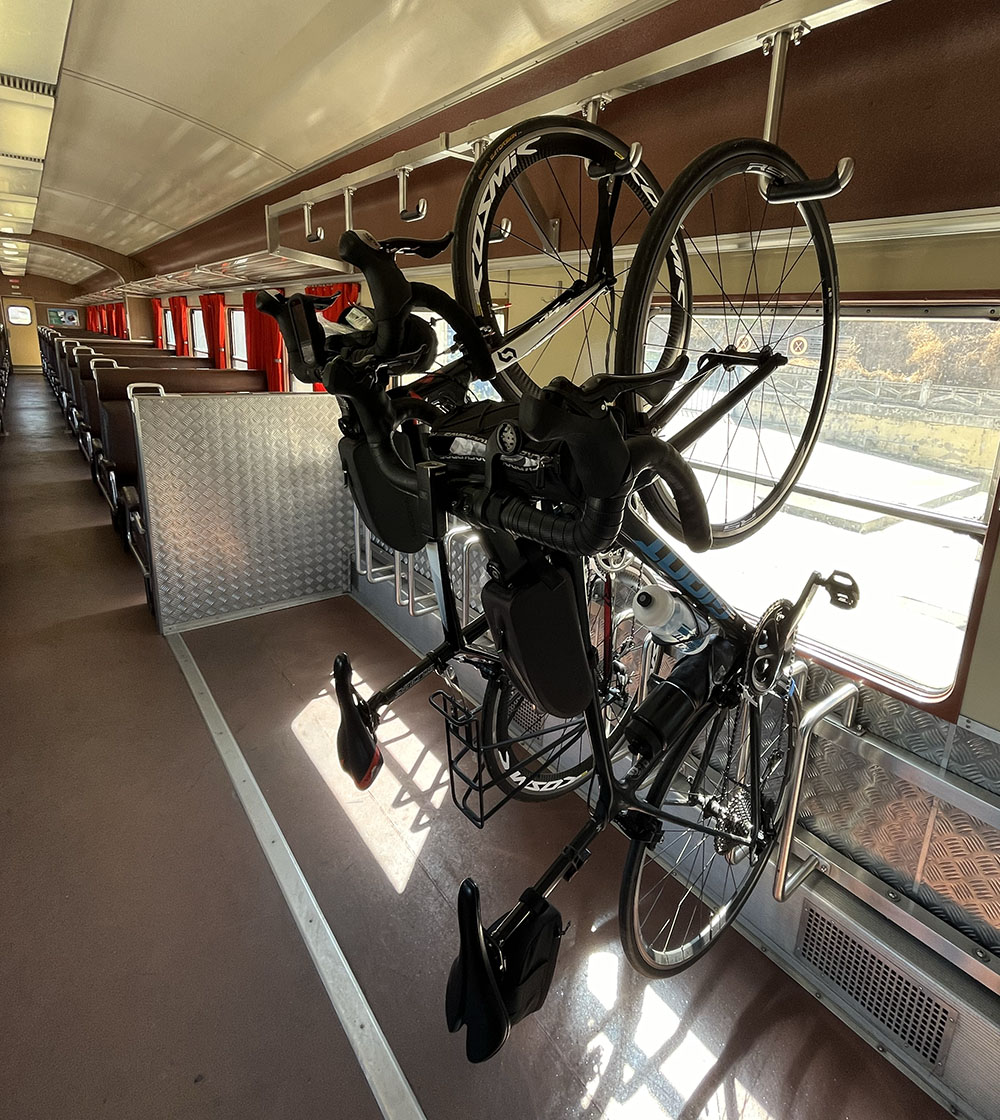
Combining bike and train travel is one of the best ways to explore Portugal efficiently and sustainably. Whether you’re planning a day ride out of Lisbon or a multi-day adventure across the country, trains can help you reach quieter areas, avoid looping routes, and relax on the way back.
But before jumping on board, it’s important to know the rules. CP (Comboios de Portugal) allows bikes on many services but with specific conditions. Here’s everything you need to know.
General Conditions for Bike and Scooter Transport
Before looking at individual train types, these general rules apply to all CP trains:
- Each passenger may carry only one bicycle or scooter
- CP is not responsible for any damage to bikes or scooters or damage caused to others during transport
- Passengers are fully responsible for loading, unloading, and securing their bikes
- Bikes must not block doors, aisles, or seats and must not obstruct entry or exit
- It is forbidden to ride bikes or scooters in trains, stations, atriums, tunnels, or underpasses
- Transport is allowed only in approved services and designated carriages
- CP staff may refuse bike transport if the train is too full or safety could be compromised
- Non-standard-size bikes (e.g. tandem bikes) are not allowed
- Electric bikes are permitted if they resemble a standard bike in shape and size (excluding battery); maximum continuous power allowed: 0.25 kW
- Bikes cannot be transported on replacement buses or during service interruptions
What Trains Allow Bikes — and How
Here’s how bicycle transport works depending on the type of train service in Portugal:
✅ Regional and InterRegional Trains
These are the most bike-friendly options. Perfect for adventure rides, countryside access, or one-way touring.
- Bikes allowed for free
- No disassembly or bag needed
- Place bikes in the designated carriage area
- No reservation required, but space is limited and first-come, first-served
- These trains are slower but offer access to remote areas, small towns, and scenic routes

✅ Urban Trains (Urbanos)
These include trains in Lisbon, Porto, and Coimbra urban networks.
- Bikes allowed for free at any time of day
- Just roll your bike in and find space near the doors
- There are no dedicated racks, but space is usually sufficient off-peak
- Ideal for combining short city rides with train segments (like Lisbon–Cascais or Lisbon–Sintra)

✅ Intercidades
Surprisingly, traditional bikes are allowed on many Intercidades routes with certain restrictions:
Allowed Routes:
- Linha do Norte (Lisboa ↔ Porto / Guimarães / Braga / Valença)
- Beira Alta
- Beira Baixa
- Alentejo (Lisboa Oriente ↔ Évora)
- Linha do Sul
Conditions:
- Only 2 bikes per 2nd class carriage (with vertical racks)
- Seats 15 and 17 (Linha do Norte) or 12 and 18 (other lines)
- Bike must weigh 15 kg or less
- Only 1 bike per passenger
- No locking system is provided

Important: It is strongly recommended to book your ticket in advance and inform CP that you will be carrying a bike when purchasing your ticket online or at the train station. This helps ensure space availability and a smoother boarding experience.

⚠️ Alfa Pendular (not recommended)
High-speed Alfa Pendular trains do NOT allow full bikes unless bagged and disassembled.
- Bikes must be completely disassembled and placed in a bag
- Bag size limit: 120 x 90 x 50 cm
- Stored in luggage racks with your other belongings
- Only one bag per passenger
- Transport is considered personal luggage, not guaranteed space
Like Intercidades, Alfa Pendular trains also have a snack bar where you can buy coffee, sandwiches, sweets, and snacks.
Fertagus — Lisbon to Setúbal
Besides CP, the Fertagus private company operates trains between Lisbon and Setúbal, crossing the iconic 25 de Abril Bridge.
- Starts from Roma-Areeiro station in Lisbon and stops at several stations including Sete Rios, Campolide, Pragal, before reaching Setúbal
- Uses a separate ticketing system from CP but you can use your normal tickets too.
- Bikes are allowed for free at any time, with dedicated bike spaces in each carriage
- Trains are frequent and connect Lisbon with natural parks and coastal cycling areas like Arrábida and Palmela
- Perfect for combining urban rides with gravel or road cycling south of Lisbon

Station Access Tips
- Major stations like Lisboa Oriente, Santa Apolónia, Porto Campanhã, Coimbra B, and Faro have elevators and wide platforms
- Smaller rural stations may have only stairs or narrow access so be prepared to lift or carry your bike
- Plan extra time for transfers, especially with loaded bikes or panniers
Useful Tips for Smooth Travel
- Use the CP or Fertagus mobile apps/websites to check train types and schedules
- Arrive early, especially on regional trains where bike space is limited
- Avoid peak hours if traveling on urban trains
Why I Use Trains for Cycling Adventures
For me, trains offer unmatched flexibility. Whether I’m riding from Lisbon to Évora, Fátima, or deep into the Alentejo or Algarve, using the train allows me to explore point-to-point routes without looping back or needing a support car.
I’ve finished long rides, had a hot meal, and boarded a train home, all in the same day. It makes one-way adventures easier, more sustainable, and more relaxing.

Final Thoughts on Traveling with Bikes on Portuguese Trains
Portugal offers one of the most bike-accessible train systems in Europe if you know the rules. Whether you’re exploring by gravel, road, or MTB, the combination of train and bike gives you freedom to go further with less hassle.
Need help planning your next trip using bike and train? I’m happy to share routes or guide you on a custom tour. You can contact me here.